India Pauses Alipay+ UPI Link: What It Means for Payments
India has put a proposed link between UPI and China-linked Alipay+ on hold over national security and data concerns, stalling a deal that could have reshaped how Indians pay abroad.
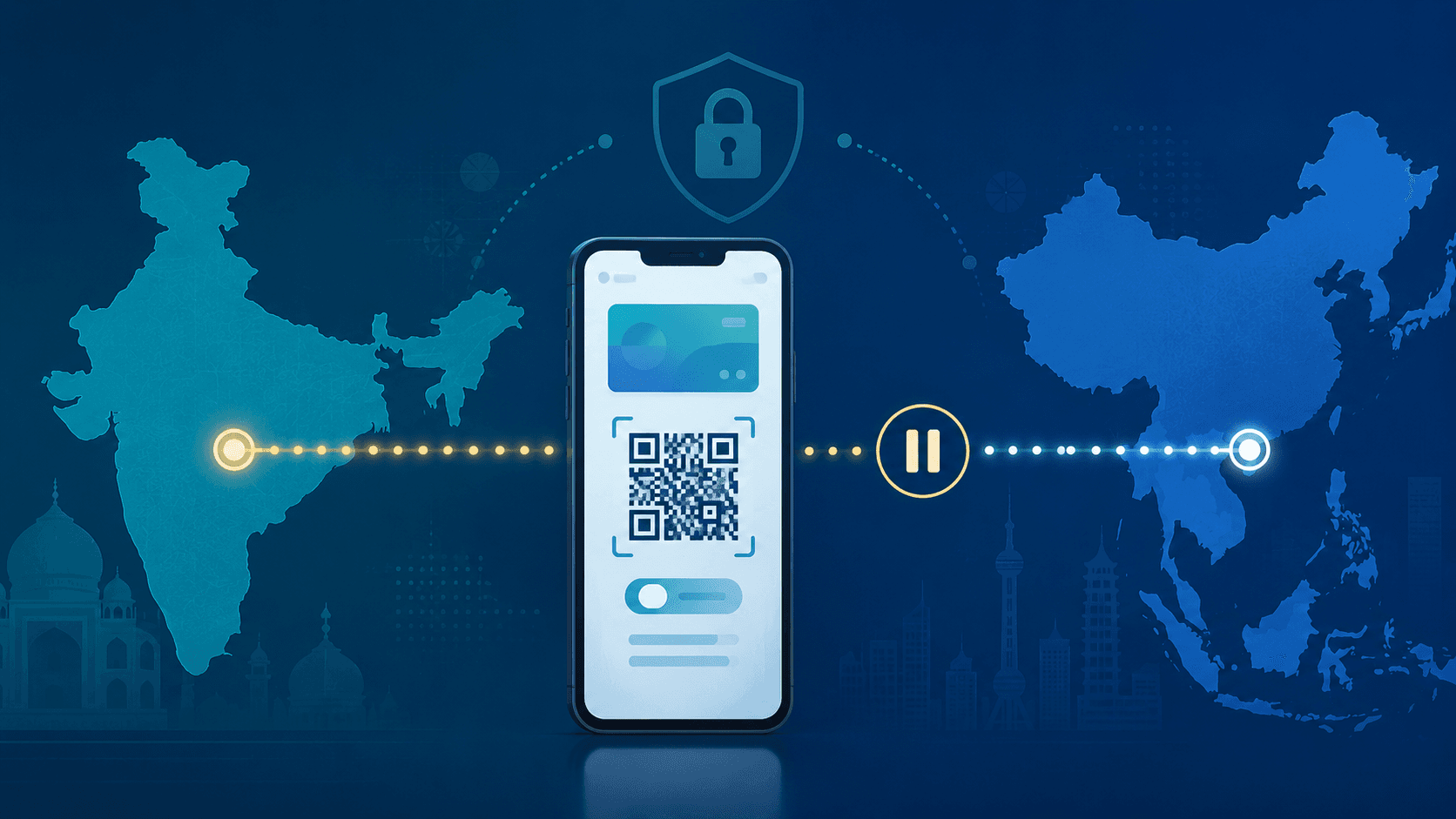
India Pauses Alipay+ UPI Link: What It Means for Cross-Border Payments
A proposed alipay upi link between India's Unified Payments Interface (UPI) and Alipay+, the international payments platform operated by Ant International, has stalled amid concerns over national security and the handling of customer data.
Reuters reported on September 3, 2026, citing people familiar with the discussions, that the proposal remains unresolved. Indian authorities have reportedly raised concerns around security and data handling, while several government bodies involved in the review have not publicly announced a final decision.
The pause puts a planned cross-border payments partnership on hold and raises questions about how India will approach international payment networks with links to foreign companies.
What Happened?
Alipay+ submitted a proposal to connect with UPI in January 2026.
The proposed alipay upi link would have allowed people using UPI-linked payment apps in India to make payments at participating Alipay+ merchants in international markets. A later phase was also expected to explore payments in India by overseas users through the Alipay+ network.
The discussions attracted attention because Ant International has links to China's Ant Group, while India has maintained tighter scrutiny of Chinese-linked technology and investment since relations between the two countries worsened after the 2020 border clash.
By the middle of 2026, the proposal was still under review. The latest reporting indicates that the process has now stalled as officials continue to consider security, regulatory and data-related issues.
Why the Alipay+ UPI Link Matters
UPI has become one of India's most widely used digital payment systems, processing billions of transactions each month.
India has also been working to expand UPI outside its domestic market through partnerships with payment systems in other countries. The aim is to make international payments easier while giving Indian payment infrastructure a larger global presence.
A successful alipay upi link could have expanded that reach considerably by connecting UPI users with a much larger international merchant network.
For Indian travelers, the biggest benefit would have been convenience. Instead of relying entirely on cards, cash or separate foreign payment wallets, users could potentially pay through familiar UPI apps at participating merchants overseas.
The arrangement could also have created new opportunities for merchants and payment companies by connecting India's payment ecosystem with a wider international network.
Why Security and Data Are an Issue
The biggest obstacle appears to be India's concerns around security and data.
Digital payment systems handle sensitive information, including transaction records and other customer-related data. When payment infrastructure crosses national borders, regulators need to determine where information is stored, who can access it and which country's rules apply.
Those questions become even more sensitive when a foreign company has links to a country that has strained political and security relations with India.
According to Reuters, these concerns are part of the reason the Alipay+ proposal has not moved forward.
The issue is therefore not simply about whether the technology can connect two payment networks. Regulators also have to consider oversight, data protection and national security before approving a cross-border payment arrangement of this scale.
India's UPI Expansion Continues
The pause does not change India's broader ambition to make UPI more useful internationally.
UPI has already been connected with payment systems in several foreign markets, allowing Indian users to make payments abroad in supported locations.
India's approach has generally focused on bilateral agreements and partnerships with local payment networks. These arrangements can reduce friction in cross-border transactions and make digital payments easier for travelers.
The proposed Alipay+ integration would have been different in scale because of the size of the network involved.
Alipay+ operates across multiple international markets and connects payment apps and merchants across regions. A successful alipay upi link could therefore have given Indian users access to a much wider merchant network than many existing bilateral arrangements.
What This Means for Indian Travelers
For now, travelers cannot assume that an Alipay+ connection will become available simply because the proposal was discussed.
Indian consumers traveling overseas will continue to depend on the payment options currently available in each destination, including international cards, cash and existing UPI partnerships where supported.
A future agreement could change that, but the latest reports suggest there is still no confirmed timeline for the proposed Alipay+ integration.
For travelers, the main practical difference is that there is currently no new UPI-Alipay+ payment option to rely on as a result of the proposed arrangement.
India-China Relations Add Another Layer
The payments proposal also needs to be viewed against the broader relationship between India and China.
While economic and diplomatic contacts between the two countries have improved in some areas, Indian authorities continue to examine Chinese-linked businesses carefully in sectors involving technology, investment and sensitive data.
That makes a national payment system particularly sensitive.
UPI is not just another commercial payment product. It is a major part of India's digital financial infrastructure. Any international partnership involving the network therefore has implications beyond ordinary commercial negotiations.
The debate around the alipay upi link reflects this wider question: how far should India's domestic digital payment infrastructure be opened to international networks while maintaining control over sensitive financial data?
What Happens Next?
The proposal has not been publicly described as permanently cancelled.
A future agreement could still be possible if the outstanding concerns are addressed and Indian authorities are satisfied with the proposed structure.
That could involve clearer rules around data storage, regulatory oversight, security controls and the role of the foreign payment network.
For now, however, the alipay upi link remains on hold.
The next stage will depend on the outcome of the regulatory and security reviews, as well as the broader relationship between India and China. For users and businesses, the larger question is whether India can expand international access to UPI while keeping the level of control it expects over payment data and digital infrastructure.
Ryan Mitchell
Verified JournalistSenior Editorial Correspondent · MoneyAllotment
Markets columnist specializing in crypto assets, central bank policies, and macroeconomic trends.
This article was researched, written, and verified in accordance with MoneyAllotment's editorial standards. Our financial reporting is strictly independent and unaffected by commercial affiliations.
Reader Discussion (0)
Be the first to share your perspective on this report.
Leave a Comment
Your email address will not be published. Required fields are marked *