••
Digital Wallets Personal Finance: Transforming Everyday Payments
How digital wallets are changing everyday payments, what the GENIUS Act means for stablecoin-based wallets, and what consumers should check before trusting a wallet balance over a savings account.
Share Article:
Editorial Illustration · MoneyAllotment
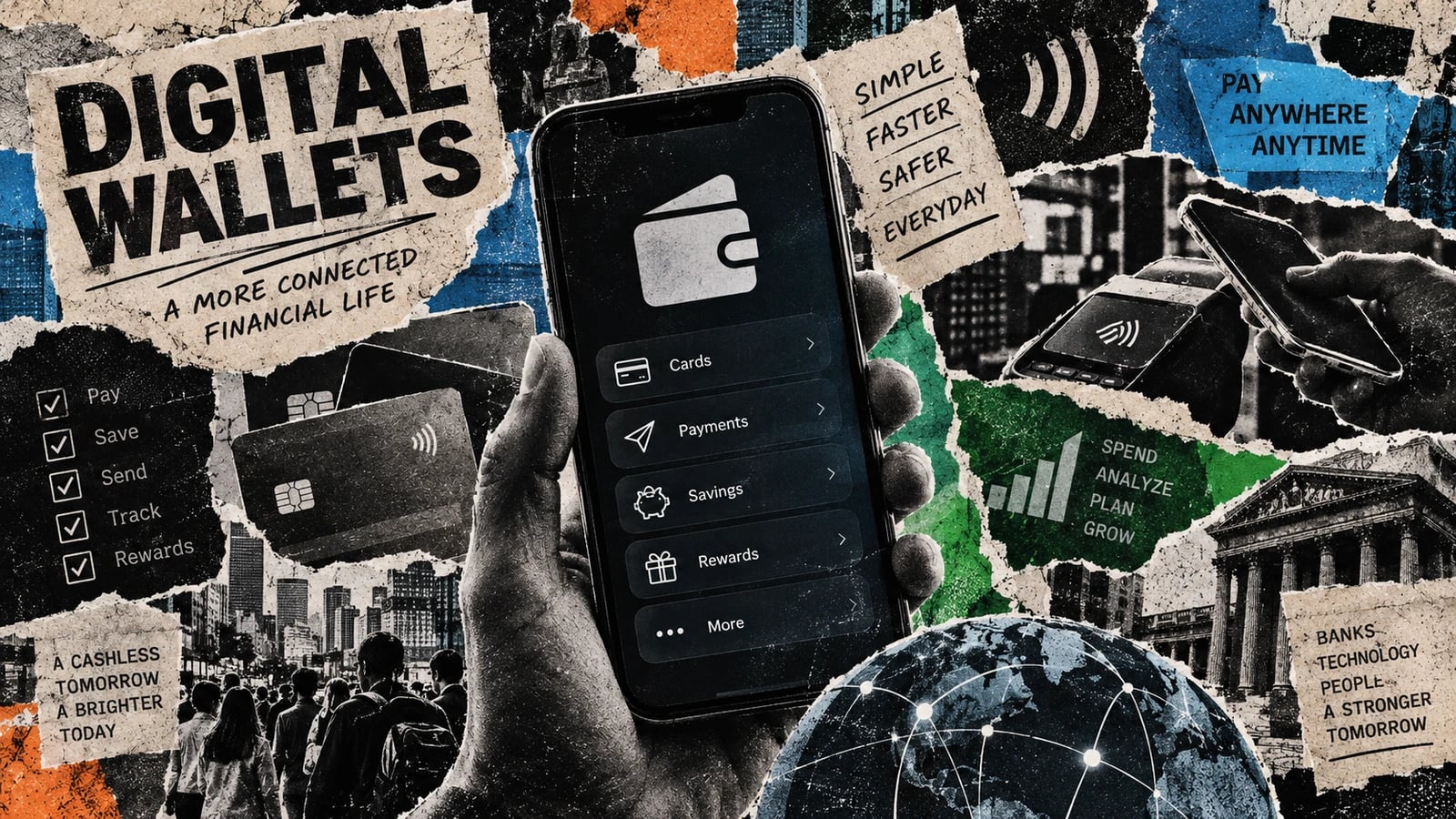
Consumers increasingly expect a single app to hold their cards, move their money, and track their spending, making digital wallets personal finance tools essential for modern money management. That shift is forcing banks, card networks, and technology companies to rethink how payment products are built, priced, and regulated, and it has real implications for how everyday households manage cash.
Wallets Are Becoming the Default Way to Pay
Federal Reserve data shows the shift is not just talk. According to the Federal Reserve's 2025 Diary of Consumer Payment Choice, U.S. consumers made an average of 11 payments per month using a mobile phone in 2024, up from four per month in 2018. The Federal Reserve Bank of Atlanta's parallel survey found mobile payment use rose from 28% to 32% of transactions between 2023 and 2024.
Cash has not disappeared. The Federal Reserve's 2026 Diary found that credit and debit cards together still account for roughly two-thirds of all consumer payments, and cash remained the third-most-used payment instrument for a sixth consecutive year, with 76% of consumers carrying cash in 2025. But the direction of travel is clear: digital wallets and mobile payment apps such as PayPal, Apple Pay, Venmo, Cash App, and Zelle are handling a growing share of everyday transactions, even as older payment methods hold on.
What a Digital Wallet Actually Does
A digital wallet bundles several things that used to be separate: a payment card, identity credentials, loyalty programs, and sometimes a small cash balance, all inside one app. That bundling changes the relationship between a consumer and their money. Instead of a single-use transaction, each payment becomes part of a continuous data relationship that the wallet operator can use to offer rewards, credit, or other services.
This has made wallets strategically important for two very different kinds of companies. Technology platforms want to own the interface consumers use every day and the data that comes with it. Banks and card networks want to keep the regulated core of the transaction, meaning custody of deposits, settlement, and credit underwriting, even if a tech company owns the screen the consumer taps.
New Rules for Stablecoins Add a Regulatory Layer
Digital wallets are also becoming entangled with a newer question: how stablecoins fit into the payments system. On July 18, 2025, President Trump signed the Guiding and Establishing National Innovation for U.S. Stablecoins Act, known as the GENIUS Act, into law. The bill passed the Senate 68-30 and the House 308-122 before being signed, and it is the first major federal law specifically governing digital assets in the United States.
The GENIUS Act creates a licensing and reserve framework for companies that issue "payment stablecoins," digital tokens meant to be redeemable at a fixed value such as USD 1. It requires issuers to hold at least one dollar of permitted reserves for every stablecoin in circulation and to be approved by a federal or state regulator. The law is scheduled to take effect on January 18, 2027, or 120 days after regulators finalize implementing rules, whichever comes first; as of mid-2026, several federal agencies had not yet issued those final rules.
For everyday wallet users, this matters less as a technical detail and more as a signal: stablecoin-based payments and wallet balances are moving from an unregulated gray area toward a supervised one, with consumer protection requirements attached. Banks exploring stablecoin issuance or tokenized deposits, and wallet operators considering stablecoin-based features, now have a defined federal framework to work within rather than a patchwork of state rules alone.
How Wallets Make Money
Digital wallet operators generally rely on four sources of revenue: interchange or processing fees charged to merchants, interest earned on deposits or lending tied to wallet balances, fees for merchant services, and ancillary revenue from rewards programs or premium features.
Because wallets reduce friction at checkout, they can increase how often a consumer completes a purchase, which raises transaction volume even as competition pushes down the fee charged per transaction.
That trade-off pushes card issuers and platform operators toward different strategies. Banks that issue the underlying cards or hold the deposits tend to look for revenue from lending and deposit spreads. Platform companies that own the wallet interface tend to look toward subscription features, data-driven products, or preferred placement deals with merchants.
Neither approach guarantees profitability on its own; both depend on keeping customer acquisition costs low relative to how often a wallet actually gets used.
What Regulators Are Watching
Because digital wallets can hold consumer funds, facilitate credit, and collect detailed spending data, they draw scrutiny from multiple regulators.
In the United States, the Consumer Financial Protection Bureau oversees consumer protection issues tied to payment products, while the Federal Deposit Insurance Corporation supervises whether funds held by banks behind a wallet are eligible for deposit insurance.
Wallet operators that are not themselves banks do not automatically pass FDIC insurance through to a consumer's wallet balance, which is one reason regulators have pushed for clearer disclosure rules.
The practical questions for a consumer are simple, even if the underlying regulation is not:
- Is the money in this wallet actually held in an FDIC-insured account, or just recorded as a balance the company owes you?
- Who is liable if a payment fails or a transaction turns out to be fraudulent?
These questions are worth answering before parking a significant balance inside any wallet app rather than a traditional deposit account.
A Simple Way to Think About Idle Wallet Balances
Some wallets pay little or no interest on funds that sit unused, while a savings account might pay a meaningfully higher rate.
A rough way to estimate what that difference costs over time:
Opportunity cost = Balance × (savings account rate − wallet yield) × (days held ÷ 365)
If a consumer keeps USD 1,000 sitting in a wallet earning 0% for three months while a savings account nearby is paying 4% APY, the forgone interest is small in absolute terms, around USD 10, but it adds up for larger balances held over longer periods.
The larger point is not the exact math but the habit: money that sits idle in a payment app for a long stretch is usually working less hard than money in an insured, interest-bearing account.
What This Means Going Forward
Digital wallets are reshaping the boundary between "payments" and "banking." Increasingly, the two functions no longer need to live inside the same institution to reach a consumer, which lowers the barrier for new entrants but raises the negotiating power of whichever company controls the interface a consumer actually taps to pay.
Expect continued deal-making between banks, card networks, and technology platforms over who captures the data, who bears the compliance cost, and who takes the deposit.
For households, the practical takeaway is straightforward: treat a wallet balance like any other financial account. Confirm where the money is actually held, whether it carries deposit insurance, and whether leaving cash there long-term costs more in forgone interest than it is worth in convenience.
Disclaimer: This article is for informational and educational purposes only. It is not personalized financial, investment, or legal advice. Consult a licensed professional for advice tailored to your circumstances.
Frequently Asked Questions
How do digital wallets impact personal finance?
Digital wallets streamline payments by consolidating cards, identity, and loyalty programs in one app. This convenience can help consumers track spending and manage finances more effectively.
What is the GENIUS Act's effect on stablecoin wallets?
The GENIUS Act aims to regulate stablecoin-based wallets, ensuring consumer protections and promoting financial stability. This legislation could influence how digital wallets operate and are integrated into personal finance.
Should I trust a digital wallet balance over a savings account?
While digital wallets offer convenience, they may not provide the same security or interest benefits as traditional savings accounts. Consumers should evaluate the risks and benefits before relying solely on wallet balances.
From the Desk
All Personal Finance →More in Personal Finance
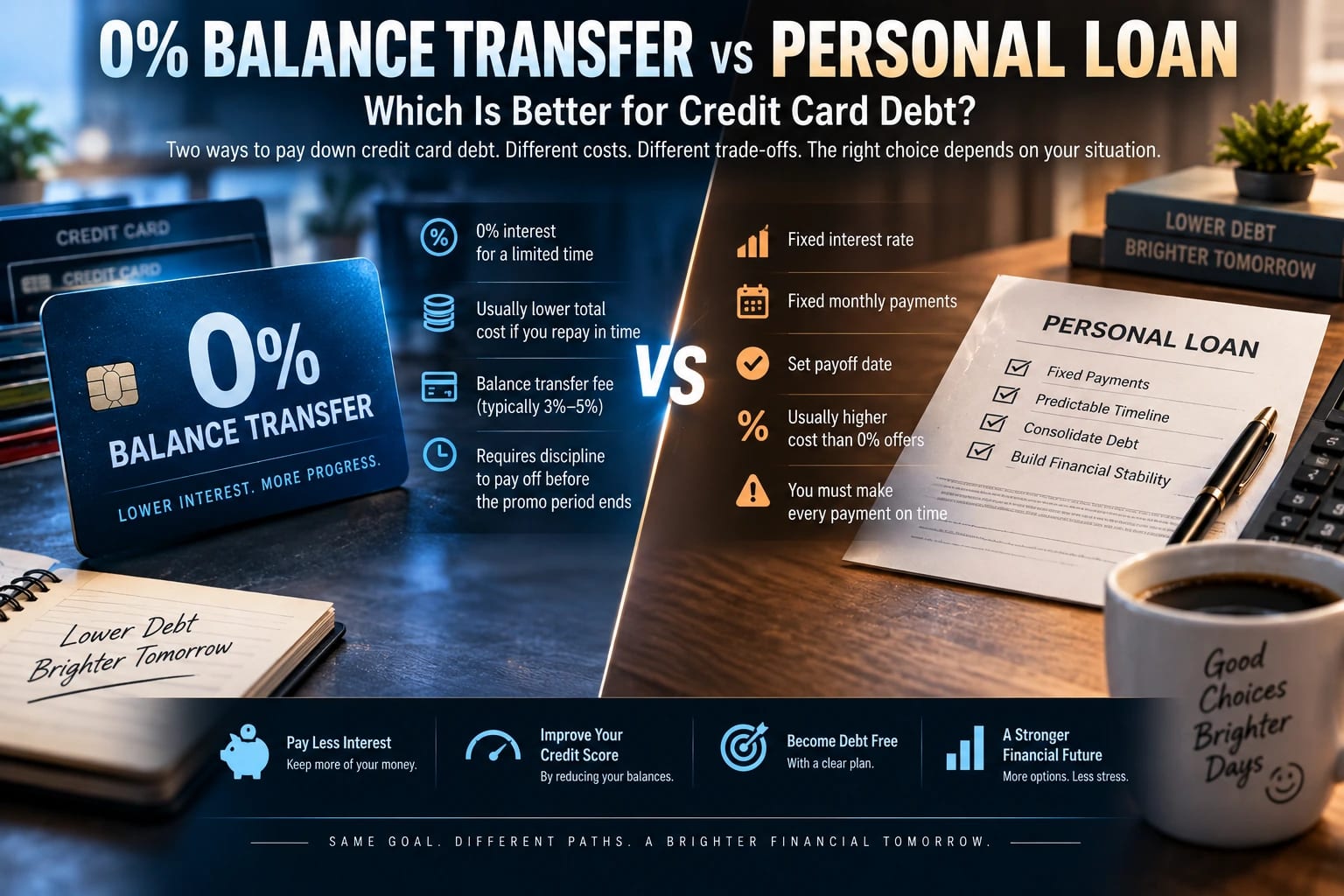
0% Balance Transfer vs Personal Loan: Which Is Better for Credit Card Debt?
A 0% balance transfer may save more if you can repay the debt during the promotional period. A personal loan offers fixed payments and more time. Compare the real costs before choosing.

Fresh Reporting
Browse All Stories →Latest from The Ledger
0% Balance Transfer vs Personal Loan: Which Is Better for Credit Card Debt?
A 0% balance transfer may save more if you can repay the debt during the promotional period. A personal loan offers fixed payments and more time. Compare the real costs before choosing.

Leave a Comment
Your email address will not be published. Required fields are marked *